
St. Lucia vs Barbados
Can't decide between St. Lucia and Barbados? Compare everything -beaches, budget, activities, food, and travel logistics -to find your perfect Caribbean island.
St. Lucia (Simply Beautiful) and Barbados (The Gem of the Caribbean) are both incredible Caribbean destinations, but they offer very different experiences. This head-to-head comparison covers everything from budget and beaches to culture and cuisine to help you decide -or plan a trip that includes both.
Side-by-Side Comparison
| St. Lucia4.9 | Barbados4.7 | |
|---|---|---|
| Tagline | Simply Beautiful | The Gem of the Caribbean |
| Size | 238 sq mi (617 km²) | 166 sq mi (430 km²) |
| Population | 183,000 | 287,000 |
| Language | English, Saint Lucian Creole French | English, Bajan Creole |
| Currency | Eastern Caribbean Dollar (XCD) | Barbadian Dollar (BBD) |
| Best Time to Visit | December to April | December to April |
| Time Zone | UTC-4 (Atlantic Time) | UTC-4 (Atlantic Time) |
| Daily Budget (Mid-range) | USD 175/day | USD 180/day |
| Attractions | 35 listed | 25 listed |
| Family Friendly | Yes | Yes |
Things to Do
St. Lucia
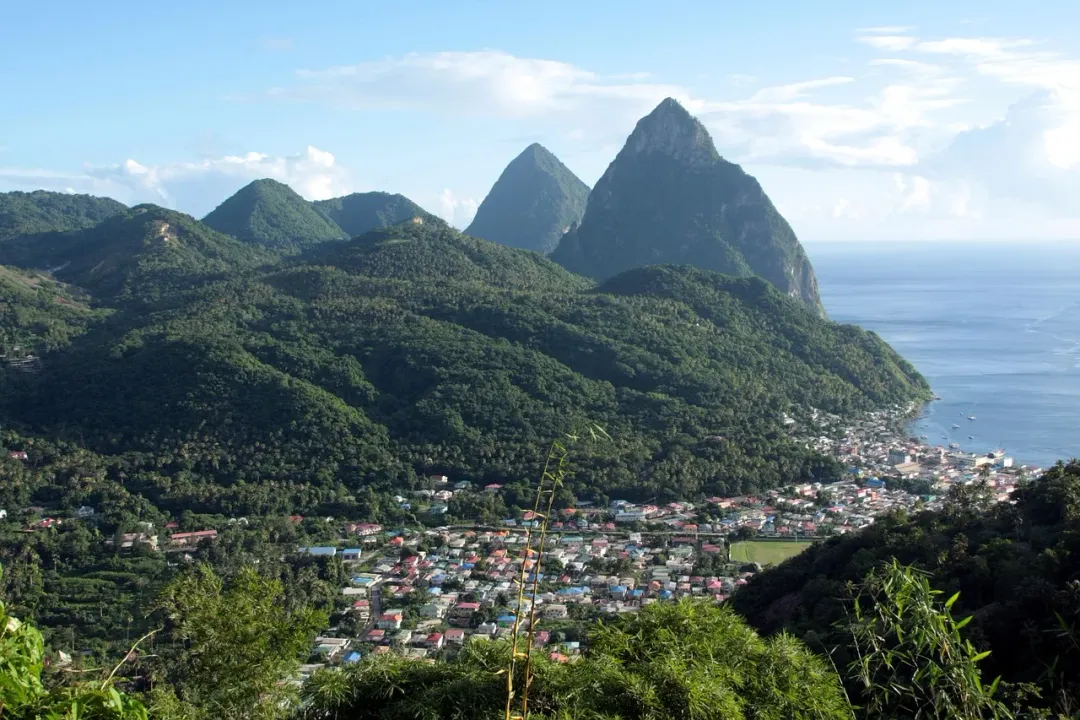
St. Lucia packs an almost unreasonable amount of variety into 238 square miles. The headline act is the Pitons, and if you are reasonably fit, the Gros Piton climb deserves a half-day of your trip. The trail starts from the village of Fond Gens Libre, just south of Soufriere, and a licensed guide is mandatory - expect to pay around US $60 per person at the trailhead.
The first half of the 4-mile return hike is a gentle slope through tropical forest, but the second half turns into a steep scramble over roots, boulders, and rock steps. Budget three to four hours round trip, bring at least two liters of water, and start by 7 AM to beat the cruise-ship groups that clog the trail after 10. The reward at 2,619 feet is a panoramic view across the channel to Martinique that makes every sore muscle worth it. For something gentler with nearly as dramatic a payoff, the Tet Paul Nature Trail outside Soufriere offers a short, guided walk to a staircase viewpoint framed perfectly between both Pitons - one of the most photographed spots on the island.
Down the road from Tet Paul, Sulphur Springs bills itself as the world's only drive-in volcano. You can walk right up to steaming fumaroles and bubbling pools, then head to the adjacent mud baths to slather yourself in two types of volcanic mud: a gritty gray exfoliant and a smoother black clay. Entry is about US $10, with mud bath add-ons bringing the total higher. Nearby Toraille Waterfall is a quick roadside stop - pay the US $3 entry, change in the provided facilities, and stand under the 50-foot cascade, which doubles as a natural shoulder massage.
Snorkeling in St. Lucia is best along the sheltered west coast. Anse Chastanet reef begins just ten yards from shore inside a protected marine reserve, with over 150 fish species and no boat traffic in the snorkel zone - gear is complimentary for resort guests, or easily rented. For more seclusion, walk the coastal path north to Anse Mamin, a quiet beach backed by 18th-century plantation ruins you can explore on foot.
Sugar Beach, wedged between the two Pitons, offers similarly rich reef snorkeling in a jaw-dropping setting, though day access comes at a premium. The cultural highlight of any week in St. Lucia is the Friday Night Jump Up in Gros Islet. This fishing village transforms after dark into a street party that has run for five decades: grills appear on every corner, local vendors serve barbecued chicken, fish in secret Creole sauce, and grilled lobster tails, while soca and dancehall thump from speaker stacks. It is loud, crowded, unpretentious, and unmissable. For a quieter deep-dive into the island's agricultural heritage, book the Tree to Bar experience at Hotel Chocolat's Rabot Estate near Soufriere, where you taste cacao pulp from a freshly cut pod and make your own chocolate bar overlooking the Pitons.
Barbados
Barbados packs a surprising amount of variety into just 166 square miles, and the best approach is to treat it as three distinct islands. Start underground at Harrison's Cave in the central parish of St. Thomas, where a tram glides through a crystallized limestone cavern system stretching over a mile and a half, past stalactites, stalagmites, and subterranean streams that pool into emerald-green lakes. Book the first morning tour to beat the cruise ship crowds, and if you want more than the standard tram ride, the adventure pass includes a zip line course and a Mount Gay rum tasting right on the property.
From the cave, it is a short drive east to Bathsheba, where the Atlantic crashes against mushroom-shaped boulders that have become the most photographed scene on the island. The Soup Bowl break here is world-class, drawing competitive surfers from October through March when north swells push waves to twelve feet, but even non-surfers should walk the coastal trail and stop for lunch at the Roundhouse, perched above the spray.
On the calm Caribbean side, the west coast catamaran cruises are the single best half-day you can spend. Operators like Cool Runnings and El Tigre sail from Bridgetown south along the Platinum Coast, stopping at Carlisle Bay where you snorkel over six sunken shipwrecks and swim alongside hawksbill and green turtles in shallow, gin-clear water. Lunch, rum punch, and snorkel gear are included on the five-hour sailings.
Downtown Bridgetown itself deserves more than a quick pass. The UNESCO World Heritage Site encompasses over 115 landmark buildings from the seventeenth through nineteenth centuries, including the Garrison Savannah, one of the oldest racetracks in the Americas, and the beautifully restored Nidhe Israel Synagogue, dating to 1654. Walk Broad Street, cut through the Careenage waterfront, and you will feel the layers of colonial and post-colonial history in every coral-stone facade.
No visit is complete without a proper rum education. Mount Gay, distilling since 1703 and the oldest commercial rum brand on Earth, offers tastings and cocktail workshops at its St. Lucy headquarters. St. Nicholas Abbey pairs its rum with a tour of a Jacobean plantation house built in 1658, one of only three surviving in the Western Hemisphere. Foursquare, run by fourth-generation distiller Richard Seale, is the connoisseur's pilgrimage in St. Philip, producing single-barrel releases that rival aged scotch. Space out the distillery visits, pair them with a beach day, and let the rum culture sink in slowly, the way Bajans intended.
Where to Stay
St. Lucia
St. Lucia splits naturally into two distinct halves, and where you base yourself shapes the entire trip. The north - centered on Rodney Bay and Gros Islet - is the livelier, more convenient side.
Rodney Bay's horseshoe-shaped beach has calm, swimmable water and a strip of restaurants, bars, and shops within walking distance. This is the practical choice for families, first-timers, and anyone who wants nightlife, easy dining, and proximity to the Gros Islet Friday Night Jump Up. Budget and mid-range options are more plentiful here, and eating cheaply is straightforward thanks to local food trucks and Creole cook shops along the strip.
Pigeon Island National Park is a short drive away. The trade-off: the Pitons, Sulphur Springs, and the best snorkeling reefs are a full 90 minutes to two hours south on winding mountain roads. The south - Soufriere and the Pitons corridor - is where the drama lives.
This is honeymoon territory: boutique resorts like Jade Mountain, Ladera, and Hotel Chocolat's Rabot Hotel perch on volcanic hillsides with unobstructed Piton views. Anse Chastanet and Sugar Beach are minutes away, and the volcano, waterfalls, and botanical gardens are all within a short drive. Evenings are quiet, serenaded by tree frogs rather than bass speakers. The downside is that high-end accommodation dominates, dining options are fewer, and getting to the north for a night out means a long, dark taxi ride. Budget travelers can find guesthouses in Soufriere town and the village of Laborie, but choices are limited. The savvy move is to split your stay: start in the south for hiking, snorkeling, and natural attractions while you have the energy, then shift north for the final days to decompress on Reduit Beach, eat your way through Rodney Bay, and catch the Jump Up before you fly home.
Barbados
The west coast, known locally as the Platinum Coast, is where the money lives. This Caribbean-facing strip from Holetown north to Speightstown offers mirror-flat water, powdery sand, and resorts that cater to honeymooners and luxury seekers. The Colony Club is reopening in 2025 as part of Marriott's Luxury Collection with swim-up rooms starting around $515 per night. The Blue Monkey Hotel and Beach Club, a boutique newcomer on the Platinum Coast, brings a Lebanese-inflected restaurant called Amara and a rooftop sunset lounge. Expect west coast accommodation to run $400 to $800-plus a night in high season for anything upscale, though smaller guesthouses in Speightstown can dip below $200.
The south coast is where most visitors land, and for good reason. The stretch from Hastings through Rockley to St. Lawrence Gap is packed with restaurants, nightlife, and mid-range hotels within walking distance of beaches that have just enough wave action to keep things interesting. The Rockley, a recent opening, starts at around $250 a night and puts you within striking distance of both Oistins and the Bridgetown UNESCO zone. Hotel Indigo Bridgetown opens in early 2026 with 132 rooms, a rooftop bar, and rates from about $480, adding a polished urban option to the south coast.
The east coast is a different world entirely. Bathsheba and the surrounding parishes of St. Joseph and St. Andrew have a handful of intimate guesthouses and eco-lodges where you wake to the sound of the Atlantic rather than a pool DJ. This is the coast for surfers, writers, and anyone who wants Barbados at its rawest. Accommodation here is limited but affordable, often under $150 a night, and you will need a car to reach the rest of the island.
Where to Eat
St. Lucia
St. Lucian cuisine is a Creole collision of African, French, and British Caribbean traditions, and the national dish - green fig and saltfish, which is boiled green banana with seasoned salted cod - appears on menus island-wide and is worth trying at least once. Breadfruit, dasheen, plantain, and callaloo feature in nearly every local meal, and the seafood is exceptional: fresh-caught mahi-mahi, red snapper, and langouste prepared in rich Creole sauce with garlic, tomato, and local herbs.
In Rodney Bay, the dining scene is the island's most walkable. The Naked Fisherman serves lobster and grilled fish beachside in a laid-back setting. Jacques Waterfront Dining offers a more refined experience with a well-regarded Sunday Jazz Brunch.
For authentic local food in generous portions, Flavors of the Broil in Gros Islet serves Creole-style broiled chicken and freshly caught seafood with rice and beans, macaroni pie, and fried plantain - exactly what Lucians eat at home. Down in Soufriere, Chateau Mygo House of Seafood sits right on the waterfront at Marigot Bay, run by Chef Shaid Rambally, and is worth the detour for grilled catch of the day. The Friday Night Jump Up in Gros Islet is less a restaurant recommendation and more an essential eating experience.
Vendors line the main street with charcoal grills, and for a few dollars you get barbecued chicken legs, grilled fish in a Creole sauce locals keep secret, roasted corn, and cold Piton beers. Come hungry, bring small bills in EC dollars or US cash, and eat standing up like everyone else. Practical tips: lunch is often cheaper and more authentic than dinner at resort restaurants. Ask for the daily special at any roadside cook shop - it will be whatever was freshest at the market that morning, slow-braised and served with provisions for under US $10.
Barbados
Eating in Barbados means navigating two parallel worlds: the polished west coast dining rooms and the street-level Bajan food culture that is frankly more interesting. Start with the national dish, cou-cou and flying fish. Cou-cou is a savory cornmeal-and-okra preparation similar to polenta, served alongside steamed or fried flying fish draped in a tomato-based creole sauce. You will find it at nearly every local restaurant, but the roadside vendors and rum shops serve it with the most character.
The Oistins Fish Fry is non-negotiable. Every Friday evening, this south coast fishing village erupts into an open-air festival where dozens of vendors grill marlin, tuna, mahi-mahi, swordfish, and lobster over charcoal pits while sound systems blast soca and calypso. Get there by 6:30 pm, head straight to Pat's Place or Uncle George's stall, and eat standing up with a Banks beer in hand. Saturday nights are good too, with smaller crowds and the same quality. Bring cash, as not all stalls take cards.
For fine dining, The Cliff on the west coast is the flagship, set on a coral bluff with underwater-lit seas beneath your table and menus crafted by Michelin-starred chef Matt Worswick. The Tides in Holetown occupies a restored coral-stone house shaded by mahogany trees, with the Caribbean lapping at its open frontage, excellent for a long seafood lunch. Champers, technically on the south coast near Rockley, bridges both worlds with ocean-view terrace dining and Caribbean-inflected plates that rely on local ingredients without the Platinum Coast price tag. Reserve well ahead for all three during December through April.
Between meals, duck into a rum shop. There are over a thousand scattered across every parish, humble counters where Bajans play dominoes, debate cricket, and drink Mount Gay neat. Order a fish cutter, the island's signature sandwich of fried flying fish on a salt bread roll, and you are having lunch for under five dollars.
The Verdict
Frequently Asked Questions About the Caribbean
More Caribbean Guides
Ready to Plan Your Caribbean Trip?
Explore all our islands, find the perfect hotel, and book unforgettable experiences.