
Things to Do in Navassa Island
The Forgotten Caribbean Territory. Explore 1 attractions across the island.
Navassa Island is, for all practical purposes, off-limits to visitors. This two-square-mile speck of raised limestone between Jamaica and Haiti is a National Wildlife Refuge managed by the U.S. Fish and Wildlife Service, and landing on the island requires a special use permit that is granted almost exclusively to scientific researchers and government personnel.
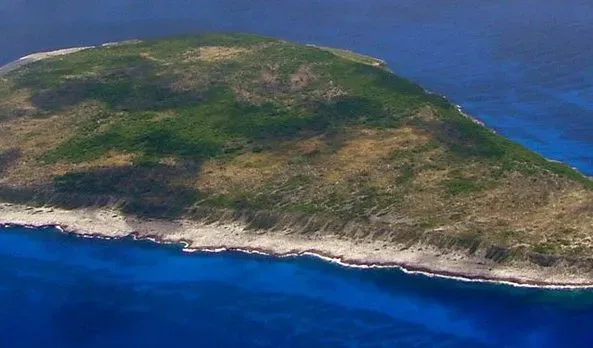
That said, understanding what exists on Navassa is worthwhile for anyone fascinated by remote places and Caribbean history. The island is a flat-topped limestone plateau surrounded on all sides by sheer cliffs rising 30 to 250 feet from the sea, with only a handful of notches in the rock where a small boat can approach. The terrain above is dense, thorny scrub forest that harbors at least four endemic lizard species, including the Navassa curly-tailed lizard, found nowhere else on earth.
Seabird colonies - boobies, noddies, and tropicbirds - nest on the cliffs in large numbers. The most visible human artifact is the ruins of a 162-foot lighthouse built in 1917 by the U.S. Lighthouse Service, which operated until 1929 and now stands as a deteriorating concrete tower visible from passing ships.
Below the surface, Navassa's isolation has produced some of the most pristine coral reefs remaining in the Caribbean. Scientific surveys have documented exceptionally high coral cover, healthy fish populations, and species diversity that rivals anything in the wider region - largely because almost no one dives here. The island's darkest chapter is its guano mining period from the 1860s through the 1890s, when African American laborers were brought to extract phosphate-rich bird droppings under brutal conditions, culminating in a revolt in 1889 in which workers killed several overseers. The resulting trial in federal court raised significant questions about labor rights and territorial jurisdiction. For the rare researcher or wildlife official who does set foot on Navassa, the experience is one of genuine remoteness - no fresh water, no shelter beyond what you bring, and a landscape that feels genuinely untouched by the modern world.
Top Activities
Scientific Research Expeditions
The only legitimate way to visit Navassa is through a scientific research permit from the U.S. Fish and Wildlife Service. Past expeditions have focused on marine biology, ornithology, and herpetology. The Center for Marine Conservation and the U.S. Geological Survey have led notable surveys documenting the island's biodiversity.
Coral Reef Surveys
Navassa's surrounding reefs are among the healthiest in the Caribbean, with coral cover and fish biomass far exceeding degraded reefs elsewhere in the region. Researchers have documented over 250 fish species and extensive elkhorn and staghorn coral colonies. These surveys are critical to understanding what healthy Caribbean reefs should look like.
Seabird Colony Observation
The island's cliff faces host significant nesting colonies of red-footed boobies, brown boobies, brown noddies, and white-tailed tropicbirds. Ornithological surveys have recorded tens of thousands of breeding pairs. The lack of introduced predators like rats has allowed these colonies to thrive.
Endemic Reptile Documentation
Navassa is home to at least four endemic lizard species, including Cyclura cornuta onchiopsis (the Navassa rhinoceros iguana, now likely extinct) and the Navassa curly-tailed lizard. Herpetological expeditions study these populations to understand island biogeography and extinction risk.
Lighthouse Ruins Exploration
The 1917 lighthouse, built by the U.S. Lighthouse Service, stands 162 feet above sea level at the island's highest point. Though no longer operational and deteriorating, it remains the most prominent human structure on the island and a landmark for passing ships.
Amateur Radio Expeditions (DXpeditions)
Navassa holds the callsign prefix KP1 and is one of the rarest entities in amateur radio. DXpeditions to Navassa are exceptionally rare - only a handful have occurred in the last several decades - and each generates enormous interest from the global ham radio community.
Attractions in Navassa Island
Explore More of Navassa Island
Find hotels, restaurants, and bookable experiences on our full island page.