
Puerto Rico vs Dominican Republic
Can't decide between Puerto Rico and Dominican Republic? Compare everything -beaches, budget, activities, food, and travel logistics -to find your perfect Caribbean island.
Puerto Rico (The Island of Enchantment) and Dominican Republic (Has It All) are both incredible Caribbean destinations, but they offer very different experiences. This head-to-head comparison covers everything from budget and beaches to culture and cuisine to help you decide -or plan a trip that includes both.
Side-by-Side Comparison
| Puerto Rico4.8 | Dominican Republic4.7 | |
|---|---|---|
| Tagline | The Island of Enchantment | Has It All |
| Size | 3,515 sq mi (9,104 km²) | 18,792 sq mi (48,671 km²) |
| Population | 3.2 million | 10.8 million |
| Language | Spanish, English | Spanish |
| Currency | US Dollar (USD) | Dominican Peso (DOP) |
| Best Time to Visit | December to April | December to April |
| Time Zone | UTC-4 (Atlantic Time) | UTC-4 (Atlantic Time) |
| Daily Budget (Mid-range) | USD 175/day | USD 120/day |
| Attractions | 94 listed | 99 listed |
| Family Friendly | Yes | Yes |
Things to Do
Puerto Rico
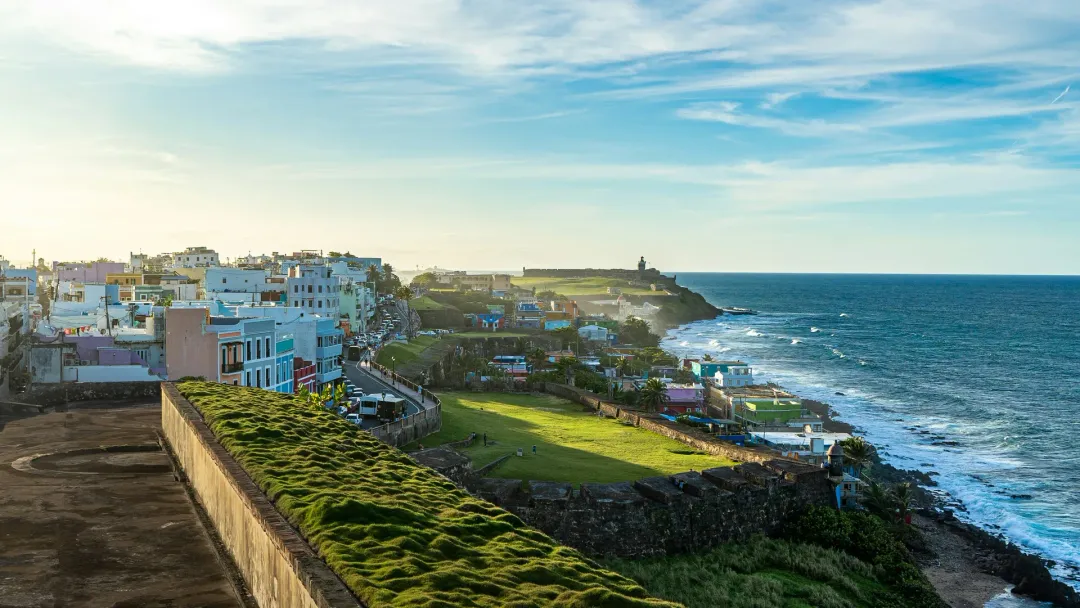
Puerto Rico rewards travelers who look past the resort pool. Start in Old San Juan, where 500 years of history line cobblestone streets - walk the ramparts of Castillo San Felipe del Morro at golden hour when the crowds thin and kite-flyers claim the wide lawn below. Cross town to Castillo San Cristóbal, the largest Spanish fortification in the Americas, where tunnels and sentry boxes make for better exploring than El Morro on busy days. Beyond the forts, Calle Fortaleza's pastel facades hide serious restaurants and artisan shops worth a slow afternoon.
About 45 minutes east of San Juan, El Yunque National Forest is the only tropical rainforest in the U.S. National Forest System. Reservations through Recreation.gov are required for self-drive entry and sell out fast, so book the moment they release or join a guided tour that handles permits for you. Arrive by 8 AM to beat afternoon showers, wear shoes with real grip, and hike the La Mina Trail to its 35-foot waterfall and swimming hole.
Guided off-trail hikes reach pristine natural pools most visitors never see. Puerto Rico holds three of the world's five bioluminescent bays. Mosquito Bay in Vieques is the brightest on earth according to Guinness - paddle a kayak through water that glows electric blue with every stroke. Laguna Grande in Fajardo is the easiest to reach from San Juan, while La Parguera in Lajas is the only bio bay where swimming is allowed.
Book during a new moon for maximum glow. On the west coast, Rincón is the island's surf capital, famous since the 1968 World Championship. Domes Beach handles beginners and intermediates with consistent breaks, while Tres Palmas is a premier big-wave spot reserved for experts - it needs to be double overhead to even start breaking. Thursday evenings bring the Rincón Art Walk with street food and local crafts, and the Sunday farmers market is worth planning around.
For a Caribbean beach that rivals anything in the Maldives, take the ferry from Ceiba to Culebra (about 30 minutes, roughly $11 each way) and spend a day at Flamenco Beach - white sand, turquoise water, almost no development. Book ferry tickets early and arrive at the terminal at least an hour ahead; weekend slots sell out. The central mountain range offers an entirely different Puerto Rico. The Ruta del Café winds through towns like Jayuya, Adjuntas, and Maricao, where family-run haciendas have grown arabica coffee for generations. Hacienda Tres Picachos in Jayuya and Hacienda Iluminada in Maricao both offer tours from seedling to cup - allow two to three hours per plantation plus slow driving on winding mountain roads. Down on Route 184 in Guavate, the Pork Highway lines both sides of the road with open-air lechoneras - Los Pinos, El Rancho Original, and Lechonera Los Amigos serve whole-roasted pig with arroz con gandules for around $8-12 a plate. Go on a weekend when the music is live and the scene is at its best.
Dominican Republic
The Dominican Republic rewards travelers who look beyond the resort wristband. Start in Punta Cana, where most visitors land, but skip the pool lounger routine and head to Scape Park at Cap Cana instead. The Hoyo Azul, a turquoise cenote tucked at the base of a limestone cliff draped in tropical vines, is worth the entrance fee alone. Pair it with the park's zip lines and cave explorations for a full day. Indigenous Eyes Ecological Park, a private reserve with twelve freshwater lagoons, offers quiet swimming holes that most resort guests never discover.
Santo Domingo's Zona Colonial is the oldest European settlement in the Americas, founded in 1496, and it feels every bit its age in the best possible way. Walk the cobblestoned Calle Las Damas past the Alcázar de Colón, once home to Diego Columbus, and duck into the Catedral Primada de América, the first cathedral built in the New World. The Zona comes alive at night along Calle El Conde, where Dominican families stroll past galleries, rum bars, and merengue blasting from open doorways. For a deeper cut, visit the Tres Ojos caves just outside the city center, a series of underground limestone caverns with sulfur-blue lakes that feel almost prehistoric. The Samaná Peninsula is where nature takes the wheel.
Between mid-January and late March, thousands of humpback whales migrate to Samaná Bay to breed, and excursion boats depart daily from the town of Santa Bárbara de Samaná. Whale Samaná, operating since 1983, runs responsible small-boat tours with marine biologist guides. While on the peninsula, the El Limón waterfall is a forty-meter cascade reached by a muddy but manageable trail or horseback ride from the village of El Limón. On the north coast near Puerto Plata, the 27 Waterfalls of Damajagua are the country's most exhilarating half-day adventure. You hike uphill through the jungle, then slide, jump, and swim your way back down through a chain of cascading pools carved into limestone.
Most visitors do the twelve-waterfall circuit, which takes roughly two hours. Helmets and life vests are mandatory, guides are included, and the ticket booth accepts only cash in pesos or US dollars. Arrive early to avoid the cruise ship crowds from nearby Amber Cove. Cabarete, thirty minutes east of Puerto Plata, is the undisputed kitesurfing capital of the Caribbean. Kite Beach fires up with thermal winds nearly every afternoon, and schools like Champion Kite School and Ion Club cater to everyone from first-timers to advanced riders.
June through September delivers the most consistent wind, though winter months bring solid conditions with better nightlife energy. For the ambitious, Pico Duarte stands at 3,098 meters, the highest peak in the entire Caribbean. The standard route departs from La Ciénaga village near Jarabacoa on a two-night, three-day trek through pine forests and cloud cover. Guides and mules are mandatory and arranged through outfitters like Rancho Baiguate or Iguana Mama. The summit sunrise, looking out over the Cordillera Central, is one of the most underrated experiences in the Caribbean.
Where to Stay
Puerto Rico
Where you base yourself in Puerto Rico depends entirely on what you came for. Old San Juan is the choice for history, architecture, and walkability - boutique hotels fill restored colonial buildings on streets like Calle Cristo and Calle Sol, and you can reach the forts, restaurants, and nightlife on foot. Expect $180-350 per night for a well-located boutique. Parking is difficult here, so skip the rental car until you leave the old city.
Condado is San Juan's upscale beach neighborhood, lined with high-rise hotels, casinos, and ocean-view restaurants. The Condado Vanderbilt and La Concha Resort anchor the strip, with rates from $250 to $600-plus per night. This is the spot for travelers who want beach access, dining variety, and proximity to Santurce's nightlife - all within a short Uber ride. Isla Verde sits closer to the airport and offers the widest stretch of beach in the metro area.
It skews more resort-oriented and slightly more affordable than Condado, with rooms starting around $116 per night at mid-range properties. Families and first-timers often land here for the convenience. Rincón on the west coast is where surfers and yoga devotees settle in. Guesthouses and surf lodges run $80-200 per night, and the vibe is flip-flops and sunsets rather than velvet ropes.
Winter (December to April) is peak season when swells are consistent and availability tightens. Vieques is the place for a quiet, off-grid Caribbean escape. Small inns and vacation rentals are the norm - expect $120-250 per night. The payoff is Mosquito Bay, wild beaches, and an island pace that feels nothing like San Juan. Book the ferry or a short puddle-jumper flight from Ceiba. Ponce, on the south coast, is underrated for travelers interested in art and architecture. Hotels here are significantly cheaper than San Juan ($80-150 per night), and the Museo de Arte de Ponce and the historic Plaza Las Delicias make it a worthwhile two-night stop.
Dominican Republic
Punta Cana is where most first-timers land, and for good reason. The all-inclusive resorts along Bávaro Beach and Cap Cana deliver the path-of-least-resistance Caribbean vacation, with rates starting around 200 USD per night for solid mid-range properties and climbing past 600 USD at places like the Puntacana Resort and Club. The trade-off is that Punta Cana operates inside a resort bubble with little connection to everyday Dominican life. Santo Domingo suits culture-hungry travelers.
Boutique hotels in the Zona Colonial, like Casas del XVI or Hodelpa Nicolás de Ovando, put you in restored sixteenth-century buildings steps from the best restaurants and nightlife. Expect to pay 120 to 300 USD per night for character-rich stays. The capital also makes a smart base for day trips to the nearby Tres Ojos caves. Las Terrenas on the Samaná Peninsula is the choice for travelers who want beautiful beaches without the resort packaging.
This cosmopolitan beach town draws a mix of French, Italian, and Dominican residents, and its boutique hotels and rental apartments along Playa Bonita or Playa Punta Popy run from 60 to 180 USD per night. Restaurants, bakeries, and beach bars line the main drag, and whale watching excursions are an easy day trip. Cabarete is built for the active traveler. Budget hostels start around 25 USD, mid-range beachfront apartments run 80 to 150 USD, and the town's nightlife is among the liveliest on the north coast.
If kitesurfing, windsurfing, or surfing is your priority, this is home base. Bayahíbe is a quieter, more affordable alternative on the southeast coast, ideal for divers and snorkelers. Small guesthouses and locally owned hotels keep costs low, typically 50 to 120 USD per night, and you are minutes from boat departures to Saona Island and the national park dive sites. Samaná town itself works for whale watching season if you want to be closest to the morning boat launches and prefer a more authentically Dominican pace.
Where to Eat
Puerto Rico
Puerto Rico's food scene punches far above its weight. The island is the only place in the Caribbean with a Michelin Guide, and the dining runs from Michelin-starred tasting menus to roadside lechón joints where the best meal costs less than a cocktail in Condado. In Old San Juan, Marmalade on Calle Fortaleza has been a fine-dining landmark for over a decade - Chef Peter Schintler's tasting menus run $145-169 for multi-course experiences that blend Caribbean ingredients with European technique. Nearby, Raices is the go-to for elevated traditional dishes like mofongo and asopao in a lively setting.
For something more casual, Caficultura serves excellent single-origin Puerto Rican coffee alongside brunch fare. Cross into Santurce and the energy shifts entirely. La Placita de Santurce is the neighborhood's beating heart - a daytime farmers market that becomes a street party after dark, with pinchos grilling on every corner. Santaella, run by Chef José Santaella, offers modern criollo cooking with international polish - the tasting menu is a standout.
Vianda, a few blocks away, does farm-to-table plates in a minimalist space where the calamares fritos and crepas de morcilla are not to be missed. Lote 23 is an open-air food park with kiosks and an Airstream cocktail bar - great for groups who cannot agree on one cuisine. Out on Route 184 in Guavate, the Ruta del Lechón is a pilgrimage every food lover should make. A string of lechoneras - Los Pinos, El Rancho Original, Los Amigos - serve slow-roasted whole pig with crispy skin, rice with pigeon peas, and cold Medalla beer at communal tables.
Full plates run $8-12 and the portions are enormous. Go on a weekend for live music. On the west coast, Rincón's dining leans casual but capable - beachfront seafood shacks serve fresh-catch mahi-mahi and tostones, and the English Roses bakery is a local favorite for morning pastries. Throughout the island, do not leave without trying alcapurrias (fried fritters stuffed with crab or beef), tembleque (coconut pudding), and a proper piña colada - it was invented here, after all, at Barrachina in Old San Juan in 1963.
Dominican Republic
Dominican cuisine is built on a foundation of rice, beans, and plantains, shaped by Taíno, Spanish, and African influences into something deeply satisfying and unpretentious. The national lunch is la bandera dominicana, literally "the flag," a plate of white rice, stewed red beans, braised meat, and a simple salad served at every comedor across the country. Seek it out at lunchtime in any neighborhood spot packed with locals, plastic chairs and handwritten menus included.
Breakfast belongs to mangú, mashed green plantains served with the "tres golpes": fried salami, fried cheese, and eggs. In Santo Domingo, the comedores along Avenida Duarte in Villa Juana serve some of the city's best morning plates for under three dollars. For a more polished setting, Morisoñando in the capital offers inventive takes on Dominican staples, including cassava-based appetizers and local ingredients given fine-dining treatment.
Sancocho, the legendary seven-meat stew slow-cooked with root vegetables and cilantro, is Sunday food and celebration food. Every family has a version, and the roadside kitchens in the Cibao Valley serve it especially well. Chicharrón, crispy fried pork belly sold from glass cases at street corners, is the essential beer snack alongside a cold Presidente.
And yaroa, a gloriously indulgent layered dish of french fries, melted cheese, and seasoned ground beef drizzled in sauces, is late-night street food perfection found at chimis vendors in every town. In Punta Cana, La Yola at the Puntacana Resort serves excellent seafood on a pier jutting over the marina, while SBG in the Hard Rock community earned the top spot in the 2025 Macarfi Guide for the eastern region. In Santo Domingo, El Mesón de la Cava is a restaurant built inside an actual cave, popular with locals for traditional Dominican dishes in a dramatic setting. Camp David Ranch in Santiago, guided by chef Sebastián Corbo, has become one of the country's most celebrated kitchens, with its goat risotto drawing food pilgrims from across the island.
The Verdict
Choose Puerto Rico if you want...
- culture enthusiasts
- surfers
- foodies
- history buffs
Choose Dominican Republic if you want...
- beach lovers
- adventure seekers
- golf enthusiasts
- all-inclusive travelers
Frequently Asked Questions About the Caribbean
More Caribbean Guides
Ready to Plan Your Caribbean Trip?
Explore all our islands, find the perfect hotel, and book unforgettable experiences.