
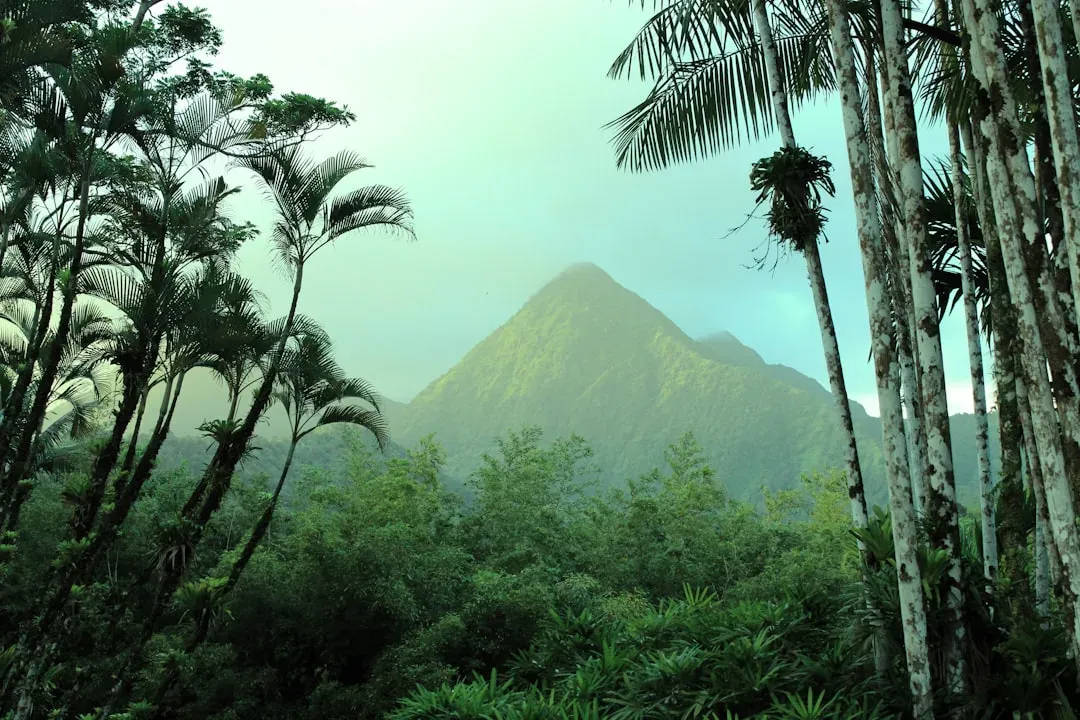
Martinique vs Guadeloupe
Can't decide between Martinique and Guadeloupe? Compare everything -beaches, budget, activities, food, and travel logistics -to find your perfect Caribbean island.
Martinique (The Flower Island of the Caribbean) and Guadeloupe (The Butterfly Island) are both incredible Caribbean destinations, but they offer very different experiences. This head-to-head comparison covers everything from budget and beaches to culture and cuisine to help you decide -or plan a trip that includes both.
Side-by-Side Comparison
| Martinique4.6 | Guadeloupe4.7 | |
|---|---|---|
| Tagline | The Flower Island of the Caribbean | The Butterfly Island |
| Size | 436 sq mi (1,128 km²) | 629 sq mi (1,628 km²) |
| Population | 376,000 | 400,000 |
| Language | French, Antillean Creole | French, Antillean Creole |
| Currency | Euro (EUR) | Euro (EUR) |
| Best Time to Visit | December to April | December to May |
| Time Zone | UTC-4 (Atlantic Time) | UTC-4 (Atlantic Time) |
| Daily Budget (Mid-range) | EUR 180/day | EUR 170/day |
| Attractions | 48 listed | 66 listed |
| Family Friendly | Yes | Yes |
Things to Do
Martinique
Martinique is the most culturally layered island in the Caribbean, a place where the volcanic north feels like a different country from the beach-lined south, and where French, African, and Creole traditions have fused into something entirely original. Begin in Saint-Pierre on the northwest coast, once known as the Paris of the Caribbean before Mont Pelée's 1902 eruption killed 30,000 people in minutes and buried the city under volcanic debris. The Musée Volcanologique Frank Perret displays scorched household objects, melted church bells, and the cell of the eruption's sole survivor - a prisoner named Louis-Auguste Cyparis whose thick-walled dungeon saved his life.
The ruins of the old theater and warehouses are still visible along the waterfront, and the snorkeling over the submerged ruins in the harbor is haunting and unique. From Saint-Pierre, the hike up Mont Pelée takes four to five hours round trip from the Aileron trailhead, climbing through cloud forest before emerging above the treeline into a lunar landscape of sulfur vents and volcanic rock. Clear summit days are rare - start before 7 a.m. for the best chance of views before clouds close in.
South of Fort-de-France, the energy shifts to Caribbean leisure. Les Salines near Sainte-Anne is the island's most famous beach, a long crescent of white sand backed by coconut palms that gets crowded on weekends with families grilling and playing music. For more solitude, drive past Les Salines to Anse Trabaud, a wilder, windswept beach reached by a 15-minute walk from the parking area.
The Presqu'île de la Caravelle, a peninsula on the Atlantic coast, offers excellent hiking through dry coastal forest to the ruins of Château Dubuc, a 17th-century plantation with views across the Atlantic to the islands of Dominica and Marie-Galante. Martinique's rum heritage is not just a tourist attraction - it is a genuine appellation d'origine contrôlée, the only rum in the world with AOC status. Distillery visits are essential.
Habitation Clément in Le François has the most polished visitor experience, set in a beautifully restored plantation house surrounded by contemporary art installations. Distillerie JM in Macouba, on the northern tip of the island, produces some of the finest aged rhum agricole in Martinique and the setting - steep hillsides dropping to the Atlantic - is dramatic. Rhum Neisson in Le Carbet is smaller and more artisanal, with tastings that let you compare blanc, élevé sous bois, and aged expressions side by side.
Guadeloupe
Guadeloupe is really two islands joined by a bridge, and that duality defines everything about it. Basse-Terre, the western wing, is volcanic, mountainous, and draped in dense tropical rainforest - the kind of landscape where waterfalls appear around every bend and the air smells of wet earth and wild ginger. Grande-Terre, the eastern wing, is flat, dry, and ringed with white-sand beaches and turquoise lagoons.
Together, they deliver a range of experiences that few single Caribbean destinations can match. On Basse-Terre, the centerpiece is La Soufrière, the 4,813-foot active volcano that is the highest point in the Lesser Antilles. The main trail from the Bains Jaunes parking area takes about two hours to the summit, climbing through cloud forest where bromeliads cling to every branch before emerging into a moonscape of sulfur vents and steam.
On a clear day, the view from the top spans Montserrat, Dominica, and the Saintes archipelago below. Check weather conditions before setting out - the summit is socked in by clouds more often than not, and the trail becomes slippery in rain. Nearby, the Chutes du Carbet are a series of three waterfalls on the eastern slope of the volcano - the second fall, at 360 feet, is the most accessible via a 45-minute forest hike.
The Route de la Traversée, the cross-island road through Guadeloupe National Park, passes through the heart of the rainforest with pulloffs for short walks to river pools and viewpoints, including the Cascade aux Écrevisses, a small waterfall with a swimming hole right off the road. On the coast, the Cousteau Reserve off Pigeon Island in Bouillante is one of the top dive sites in the French Caribbean, named for Jacques Cousteau who declared it one of the world's best dive sites in the 1950s. The coral gardens and volcanic underwater terrain shelter sea turtles, seahorses, and large barrel sponges, and the site is accessible to both divers and snorkelers.
Grande-Terre's appeal is more classically Caribbean. Sainte-Anne has the best public beaches, including Plage de la Caravelle, a calm, palm-fringed crescent of sand with a Club Med at one end and free public access at the other. Pointe des Châteaux at the island's eastern tip is a dramatic headland of wind-carved rock that feels more like Brittany than the tropics - a short hike to the cross at the summit offers views across to La Désirade and Petite-Terre. The off-islands are essential day trips. Les Saintes, a 20-minute ferry from Trois-Rivières on Basse-Terre, is a tiny archipelago dominated by Terre-de-Haut, a fishing village with red-roofed houses, fort ruins, and Pain de Sucre beach, one of the prettiest small beaches in the Caribbean. Marie-Galante, reachable by a 45-minute ferry from Pointe-à-Pitre, is rural, unhurried, and home to three rum distilleries - Distillerie Bellevue, Distillerie Bielle, and Père Labat - that produce some of the strongest and most characterful rhum agricole in the French Antilles.
Where to Stay
Martinique
Martinique's accommodation landscape reflects its dual identity as a French department and a Caribbean island. The southern coast around Les Trois-Îlets, Sainte-Anne, and Le Diamant has the highest concentration of beach-oriented hotels. Club Med Les Boucaniers near Sainte-Anne is one of the chain's flagship Caribbean resorts, with all-inclusive rates from around 250 euros per night.
La Suite Villa in Les Trois-Îlets is a stylish boutique property with individual villas and a rooftop pool, starting around 180 euros. Cap Est Lagoon Resort & Spa on the Atlantic coast in Le François is the island's top luxury property, set on a private peninsula with suites from 350 to 600 euros. For mid-range travelers, the Karibea chain operates several properties across the island with rates from 90 to 140 euros.
Gîtes (self-catering vacation rentals) are deeply embedded in Martinican travel culture and represent the best value, particularly for families and longer stays - expect to pay 50 to 100 euros per night for a well-equipped one or two-bedroom property. The northern towns of Saint-Pierre and Le Carbet have smaller, more character-driven options that put you close to hiking and distilleries. Airbnb and gîte agencies like Gîtes de France Martinique have extensive listings.
High season runs mid-December through April, with rates 20 to 40 percent above low season. Book Christmas and Carnival weeks well ahead. Low season (June through November) brings meaningful discounts and fewer crowds, though humidity increases and brief afternoon showers are common.
Guadeloupe
Guadeloupe's accommodation scene centers on two distinct areas. The Grande-Terre coast from Gosier to Sainte-Anne is the resort strip, with the majority of the island's beach hotels.
La Creole Beach Hôtel & Spa in Le Gosier is a well-run mid-range property on a private beach, with rates from around 150 to 250 euros per night. La Toubana Hotel & Spa, perched on cliffs above Sainte-Anne, has individual bungalows with sea views from 200 euros and is one of the island's most atmospheric properties.
For luxury, Langley Resort Fort Royal in Deshaies on Basse-Terre's northwest coast offers a secluded beach setting from 280 euros. Budget-conscious travelers thrive in Guadeloupe thanks to the island's strong gîte tradition - self-catering vacation rentals are everywhere, particularly in Sainte-Anne, Bouillante, and Deshaies, with rates from 40 to 90 euros per night for a well-equipped studio or one-bedroom.
Gîtes de France Guadeloupe rates properties on a quality scale and is a reliable booking source. Airbnb options are plentiful across both islands. For a unique experience, stay on Terre-de-Haut in Les Saintes - Hôtel Bois Joli on the waterfront offers simple but charming rooms from 100 euros, and the island's tranquility after the last ferry departs is worth the limited dining options. On Basse-Terre near the hiking trails, small eco-lodges and mountain gîtes in towns like Bouillante, Petit-Bourg, and Capesterre-Belle-Eau put you close to the volcano, waterfalls, and Cousteau Reserve. High season runs December through April, with premiums of 20 to 40 percent over the rest of the year.
Where to Eat
Martinique
Martinique has arguably the best food scene in the Caribbean, a product of its dual French and Creole culinary inheritance. In Fort-de-France, the Grand Marché Couvert is the essential first stop - vendors sell fresh spices, tropical fruits, colombo powder (Martinique's signature curry blend), and bottles of homemade shrub, a rum maceration with citrus peel and spices.
Upstairs, the market restaurants serve plates of grilled chicken, accras de morue (salt cod fritters), boudin créole (blood sausage), and court-bouillon de poisson (fish in spiced tomato broth) for 10 to 15 euros. La Table de Marcel in Les Trois-Îlets serves elevated Creole cuisine in an elegant garden setting - try the colombo de poulet or the grilled crayfish at around 30 to 50 euros per person.
Le Petibonum in Le Carbet, right on the black sand beach beneath Mont Pelée, is run by chef Guy Ferdinand and has become a destination restaurant for its inventive fish dishes, flamboyant presentation, and beachfront tables. Expect 25 to 45 euros for mains.
For the best bokit - a fried bread sandwich stuffed with saltfish, chicken, or lambi (conch) that is Martinique's supreme street food - seek out the trucks parked near beaches and town squares, particularly the vendors on the Sainte-Anne waterfront. Ti-Punch, the island's ritual aperitif of white rhum agricole, lime, and cane sugar, is served everywhere and by custom you mix your own at the table. Supermarkets like Carrefour and Leader Price stock excellent French cheeses, wines, and charcuterie for villa cooking. Budget 40 to 60 euros per person per day for restaurant dining, considerably less if you mix in market food and home cooking.
Guadeloupe
Guadeloupe's food scene is deeply rooted in Creole tradition with unmistakable French polish. The island's signature dishes include colombo de cabri (goat curry with a spice blend brought by Indian indentured workers), accras de morue (crispy salt cod fritters served as a universal starter), court-bouillon de poisson (fish braised in a spiced tomato and herb sauce), and boudin créole (spiced blood sausage served at every fête and market).
In Pointe-à-Pitre, the Marché de la Darse on the waterfront is the place to eat lunch like a local - women vendors serve plates of grilled chicken, rice and beans, and fried plantains for 8 to 12 euros. La Route des Châteaux in Saint-François, the Grande-Terre resort area, has a cluster of upscale restaurants where lobster, ouassous (freshwater crayfish), and refined Creole tasting menus run 40 to 70 euros per person.
Chez Loulouse in Sainte-Rose on Basse-Terre is legendary for its ouassous served in various preparations - grilled, flambéed in aged rum, or in a creamy bisque. On Terre-de-Haut, Les Saintes, the waterfront restaurants serve fresh catch of the day and the local specialty tourment d'amour, a small tart filled with coconut jam.
For casual beach eating, the bokits - deep-fried bread stuffed with salt cod, chicken, or conch - sold from roadside trucks near Sainte-Anne and Le Moule are the island's best cheap meal at 5 to 8 euros. Ti-punch (white rhum, lime, cane sugar) is the customary aperitif and you will be expected to prepare your own at the table from a tray of ingredients. Supermarkets like Carrefour and Hyper U stock excellent French products for self-catering. Budget 35 to 55 euros per person per day for dining out, less if you embrace market lunches and gîte cooking.
The Verdict
Frequently Asked Questions About the Caribbean
More Caribbean Guides
Ready to Plan Your Caribbean Trip?
Explore all our islands, find the perfect hotel, and book unforgettable experiences.